Posts

Showing posts with the label # Jewish culture

THE FESTIVAL OF LIGHT

The story of Chanukah, a Jewish festival being celebrated this week, begins during the second century BCE. Israel was then ruled by Antiochus IV who decided to force the pace of Hellenisation on the Jews of the land of Israel. His aim was to completely undermine the moral foundations of the Jewish nation. Rome forced the Jewish people to accept its own moral code: novel, human, fresh and tempting. At the time, the Greeks were the world’s greatest in many fields. They were unparalleled in their advances in art, architecture, literature, drama, philosophy.   In many ways, their achievements have never been surpassed. The battle between the two sides   was based on the question which way of life is more authentic. The ancient Jewish way, or the modernistic Greek way. That which places spiritual values at the centre, or that which considers materialism as the basis of nation building. That which worships the body or that which   crowns the soul. This was the unique di...
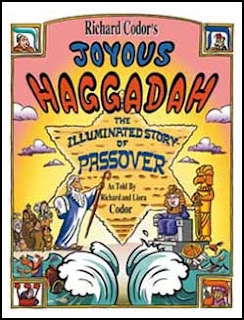
FOOD FOR THE SOUL

Image
FOOD FOR THE SOUL The Festival of Pesach (Passover), which we celebrate in three days time, is highly symbolized by food. Throughout the eight days of the Festival, matzah (unleavened bread) is eaten instead of ordinary bread, to recall the hurried baking of matzah during the Exodus itself. On the last night in Egypt each Jewish household ritually slaughtered a lamb and then ate it at a family gathering. This banquet – reverent in purpose and joyful in practice – has been perpetuated through the ages in the Pesach `Seder` ceremony, celebrated on Pesach eve. To set the Seder Table for the ceremonies, the following will be arranged on a special Seder plate: Bitter herbs - in memory of the `bitterness` of slavery in Egypt; a sweet paste made of apples, and nuts mixed with a little wine – to soften the bitterness and simulate the `mortar` used by our ancestors in building for the Egyptians; a bone with a little meat roasted - in memory of the ancient Temple sacrifice; a baked egg -...

JEWS AS FARMERS

You have to go back almost 2,000 years to find a time when Jews, like virtually every other identifiable group, were primarily an agricultural people. Around A.D. 200, Jews began to quit the land. By the seventh century, Jews had left their farms in large numbers to become craftsmen, artisans, merchants, etc., the only group to have given up on agriculture. Jewish participation in farming fell to about 10 percent through most of the world. It’s true that in the Middle Ages, Jews were often prohibited from owning land. However, in the Muslim world, Jews faced no limits on occupation, land ownership, or anything else that might have been relevant to the choice of whether to farm. Moreover, a prohibition on land ownership is not a prohibition on farming. So, what’s different about the Jews? Why didn’t other groups leave the land? The temptation was certainly there. Skilled urban jobs have always paid better than farming. But those jobs require literacy, which requires educatio...

MYTHS OF THE MIDDLE EAST - I

The destruction of the First Temple in 586 B.C.E., was the most traumatic and transformative event for the Jewish people to have ever taken place.   According to rabbinic tradition, the Second Temple in 70 C.E. was destroyed by the Romans on the very same day, and this time the Jewish people were exiled from their homeland of Israel. From then on, the Romans promised, it would be known as Palestine . The name was derived from the Philistines, a people conquered by the Jews centuries earlier. It was a way for the Romans to add insult to injury. Another long list of traumatic events suffered by the Jews are believed to have occurred around the same day, quite a few of which have been   historically proved. Since then, from that day to the present time, Jews all over the world have fasted in order to commemorate specific events related to the Destruction. Today, we are almost at the end of the three weeks of mourning preceding the fast known as Tisha b’Av (ninth of the mo...

TO LIFE

In Judaism, human life reigns supreme, and saving lives takes precedence over all other contingencies. “Whoever destroys a soul, it is considered as if he destroyed an entire world. And whoever saves a soul, it is considered as if he saved an entire world.” [Jerusalem Talmud]. Giving to the poor, is a form of   a life-enhancing obligation in Judaism, a duty that cannot be rejected even by those who are themselves in need. Some sages have said that “ tzedakah ” is the highest of all commandments, equal to all of them combined, and one of the three acts that gains us forgiveness from our sins. " Tzedakah " is the Hebrew word for the acts that we call "charity" in English: giving aid, assistance and money to the poor and needy or to other worthy causes. However, the nature of tzedakah is very different from the idea of charity. The word "charity" suggests benevolence and generosity, a magnanimous act by the “haves” for the benefit of the “have nots...