Posts

Showing posts with the label #moshav

OUT OF THE ASHES

Encouraged by the government back in the late 60’s and early 70’s to settle and develop Gush Katif, the settlers’ ideology and faith gave them the momentum to make the region blossom. They were so connected to the land itself, that they simply couldn’t imagine living anywhere else. When their communities were destroyed, completely crushed and dismantled, they relied on that same ideology and strength of character to persevere, rebuild and still radiate a warmth that only those from such small towns and villages can radiate. Simcha’s youngest son, 23 year old Gilead,  has been serving in the IDF for three years and five months. Since his father had been murdered on army duty he was exempt from serving in a fighting unit and his mother had to sign a special document in order for him to do so. “From the time I was recruited, I was determined to join a “fighting”  unit but  wanted something different, something a little harder, more challenging. I was taught, from an ...
GUSH KATIF - II

Image
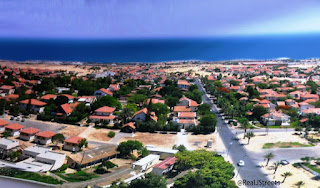
GUSH KATIF – II Gush Katif – 10 years old Since Gush Katif was planned as a strategic buffer between Israel and Egypt, people were given incentives to join and were offered a small house (not yet built) and a greenhouse. Ganei Tal , which Simcha (my first-born) and her husband, Gideon , decided to join, was the second moshav to be built there. Since the houses had not yet been built the other members, who were all married and lived elsewhere, had to leave their families in their homes at the beginning and lived together as bachelors in one building, in order to be able to start work in their greenhouses. Simcha and Gideon, who were newly-weds, started their married life living in an old caravan and turned it into a home - although Gideon was so tall that his feet stuck out of the “bedroom” window! Their next “home” was an old bus from the time of the British mandate which Gideon shlepped from the Tel-Aviv old ...

Remember GUSH KATIF?

Jews and their Israelite ancestors have lived in Gaza since Biblical times. A historic Jewish community existed in  Gaza City  prior to its expulsion by the British, for safety reasons, during the infamous 1929 riots by the city's Arabs. Land for the village of  Kfar Darom  was purchased in the 1930s and settled in 1946. It was evacuated following an Egyptian siege in the  1948 Arab-Israeli War . Gush Katif began in 1968, when  Yigal Allon  presented an initiative for the founding of two  paramilitary settlements in the center of the Gaza Strip. He viewed the breaking of the continuity between the northern and southern Arab settlements as vital to Israel's security in the area, which had been captured the previous year in the 1967  Six-Day War . In 1970, Kfar Darom was re-established as the first of many Israeli agricultural villages in the area. Allon's idea was ultimately designed with five key areas slated for Israeli presenc...

DOWN TO EARTH - II

Image
For the last two thousand years at least, since the Jewish People had no homeland and were subject to the whims of their host countries, they were not allowed to own land and were very restricted in their livelihoods.  They only started working on the land again when the first pioneers emigrated to Israel in  1882 which was known at the time as Palestine, a name given to the area by the Romans. The original names, from bible times, were Judea and Samaria. Which brings me back to the moshav in the Negev where I spent 40 years of my life. All our children helped out on the moshav from a very early age and learned the value of hard work, developing a strong “work ethos”.  What is most surprising however is that,  somehow, my oldest son Azriel “inherited” love of the land. He knew he wanted to be a farmer from a very early age and, in order to study agriculture he went to the U.S., after his army duty, in order to make enough money to attend the Faculty of Agri...

DOWN TO EARTH

Image
It was only in my teens that I became aware of a country called Israel. Someone introduced me to a Zionist movement - and that was the major turning point  in my life. I eventually joined a training farm in England run by the movement . My goal was to eventually become part of an agricultural community in Israel. My farming experience in England was centered around the cowshed where I had become very proficient in milking cows. I emigrated at the end of 1954 but, by the time I was able to join a moshav in 1960, I was already married with two small children aged three and one-and-a-half years old. Neither my husband nor myself knew anything about farming but we were both determined to become pioneers. The moshav, which had just been founded, was located in the northen Negev. We had no financial means but were helped by the government who wanted to develop the country, especially the Negev. It was like a barren wilderness with nothing but bare land. Today, it is a...