Posts

THE ORIGINS OF GRANDMA'S ARMY - WWII
Image
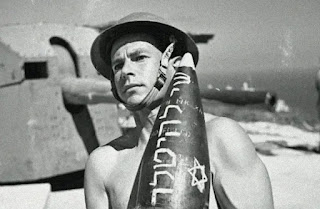
  More than 40,000 Jews enlisted into the British Army during World War II to fight against the Nazis. Over 700 were killed during active duty.    Th roughout the war, Jews served in various positions. Palestinian Jewish volunteers cooperated with British intelligence units and sent its personnel out on various commando missions in the Middle East.  Another example of this cooperation was the dropping of 37 brave men and women (among them Hannah Szenesh), who volunteered to parachute into Nazi-occupied Europe. Their mission was: to gather intelligence; rescue Allied forces who had fallen into enemy territory; and try to save Jews in Europe. Due to Arab opposition to the proposed Jewish homeland in Palestine, the British initially refused to establish a separate fighting unit of Jewish volunteers from Palestine. However, wartime manpower requirements and the strategic need to defend the Middle East induced the British to permit the formation of 15 Palestinian Jewi...
THE ORIGINS OF GRANDMA'S ARMY - IV

Image
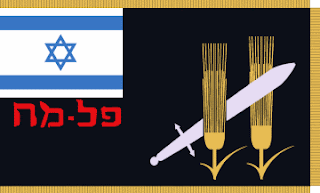
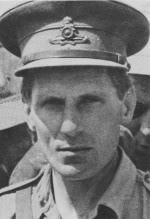
  THE ORIGINS OF GRANDMA’S ARMY – IV News of the Nazis' plan to conquer the Middle East spread rapidly as France, which controlled Lebanon and Syria, came under pro-Nazi Vichy's rule, and German General Rommel made his way through North Africa's shores to the Suez Canal.   Th is resulted in the establishment of the  Palmach , the Haganah's official military branch. The Palmach   was created as a force to protect and defend the Jewish people in Israel, in the event of a Nazi invasion. It was an integral part of the Haganah . Every Palmach member was loyal to the Haganah as well.                                                                                                   ...

THE ORIGINS OF "GRANDMA'S ARMY" - III

Image
  THE ORIGINS OF “GRANDMA’S ARMY” - III Arab riots in Palestine in 1920 and 1921 strengthened the view that it was impossible to depend upon the British mandate. The Palestinian Jews felt the necessity to create an independent defense force completely free of foreign authority. In June 1920, the Haganah , as an underground military organisation, was founded. During the first nine years of its existence, the Haganah was a loose organization of local defense groups, in the large towns and several of the settlements. The Arab riots in 1929  brought about a complete change in the Haganah’s status: It became a large organization, encompassing nearly all the youth and adults in the settlements, as well as several thousand members from each of the cities. It initiated a comprehensive training program for its members, and ran officers’ training courses. Established central arms depots into which a continuous stream of light arms flowed ...

THE ORIGINS OF "GRANDMA'S ARMY" II

Image
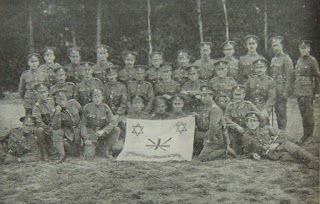
  THE ORIGINS OF “GRANDMA’S ARMY” - II Once World War I came to an end, the British gained control over the Land of Israel as part of the Sykes–Picot Agreement, which divided the Middle East between the British and French. By the beginning of 1919, the three   Jewish battalions numbered over 5,000 men After the victorious end of the Palestine campaign, the name "Royal Fusiliers" was changed to " Judean Regiment ". Its insignia became a menorah  with the Hebrew  word " kadimah " (“forward”), and all officers and men at the front wore a Magen David on their sleeves. The actual strength of the Legion could have been more than twice as large. Applications for enlistment came from several countries; 1,500 volunteered in Salonika; in Italy 2,000, Transylvanian prisoners of war applied to be enlisted; the "Mountain Jews" from Dagestan in the Caucausus sent emissaries offering all their youth. The number of those who were allowed to actuall enlis...

THE ORIGINS OF GRANDMA'S ARMY - I

Image
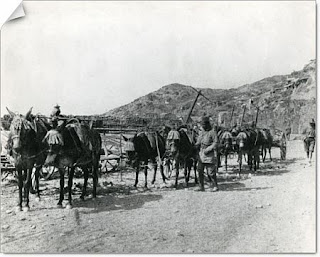
After the outbreak of WWI,  Zeev Jabotinsky and Joseph Trumpeldor submitted a resolution to the commander of British forces in Egypt, asking him to form a Jewish Legion, and propose to England its usefulness in Palestine. The commander told his Zionist visitors: "Under the law I am not entitled to accept foreigners into the British army. I can offer you only one thing: to form a mule transport unit from your young people and send it to a different Turkish front". In April 1915  “the Zion Mule Corps ”, so named by its commander Colonel John Henry Patterson, sailed from Egypt to Gallipoli. It consisted of 562 mostly Palestinian Zionists, five British officers, eight Jewish officers and 750 mules. As the Zion Mule Corps was the only transport unit on the peninsula, it was soon involved in transporting water, ammunition, food and other supplies to the front lines - under heavy fire. Probably, this was the first purely Jewish fighting corps that went into action since Jerusal...

THE ORIGINS OF "GRANDMA'S ARMY"

Image
The end of the 19th century marked the start of a new movement––“Zionism”. Theodor Herzl, the founder of the Zionist movement, called for Jews across the globe to come together and form a national home for the Jewish people. Back then, the Land of Israel was part of the Ottoman Empire, and populated mainly by itinerant Arabs from throughout the Middle East. The Jewish communities were mainly to be found in holy cities such as Jerusalem and Safed, that had existed for centuries.  Inspired by Zionism and facing violent progroms in eastern Europe, more and more Jews felt the need to escape to a place they could call their own. They came to Israel and established the first "Moshavot"––Jewish agricultural communities and towns. As Jewish communities bloomed throughout the Land of Israel, the concept of "Hebrew Labour" became the cornerstone of Israel's national revival process. By shaping a new society and building a country with their own hands, the Zionist ...

MEANINGFUL COMMUNICATION

When opening my cell phone today I was appalled to see that I had over 500 messages on my what’s app! It appears that my 10 year old great grandson had mistakenly attached me to his group of friends. After getting over the shock, I realized that I was three generations removed from our youngster and must accept today’s methods of communication. Not that I approve. Not so long ago, if you wanted to talk with family or friends, you had to use your land line phone. If not at home, there were those iconic phone booths. The phone cord forced us to stay focused, without the flexibility to multitask. The conversation, the person we were speaking to, was what mattered. Not so long ago, we also used to write letters. Real ones, with a pen and paper. You needed envelopes and stamps and postal workers to deliver them. We used to check our mail boxes every day. I distantly remember the pleasure to be had when receiving a handwritten letter. To sit down, open and read it. Focus, smile and rea...